

RAG in a SaaS template: what to wire first
Published Feb 02, 202611 min read
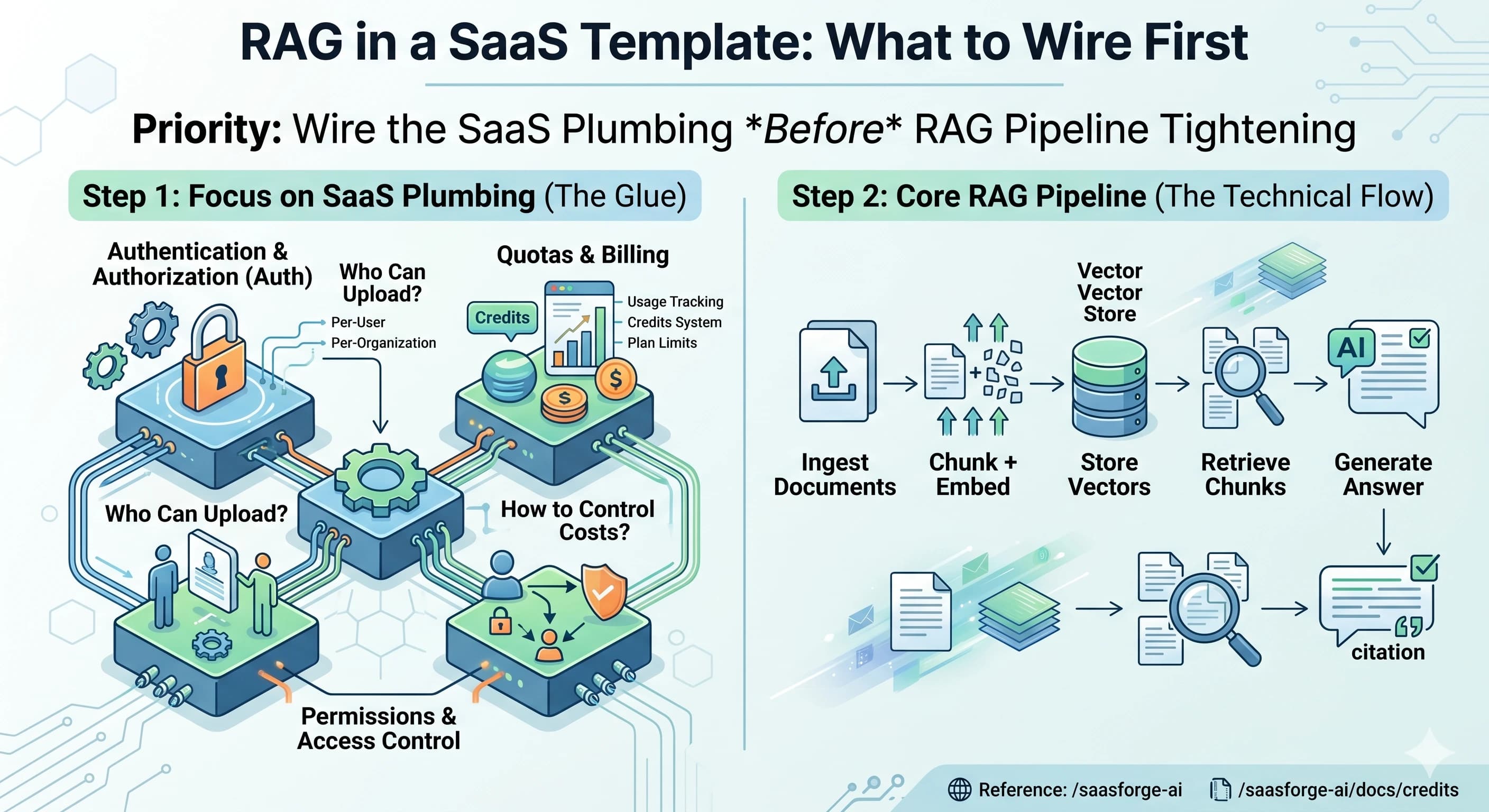
RAG is five boring pipeline steps plus a pile of product decisions: who can upload, what happens when embeddings spike your bill, and how you prove answers are grounded.
If you start from a template, sort the SaaS plumbing first (auth, quotas, billing), then tighten retrieval. The model is not the risky part; customer data and cost are.
The core RAG pipeline (in plain terms)
Most RAG systems have the same components:
- Ingest documents
- Chunk + embed
- Store embeddings
- Retrieve relevant chunks per query
- Generate an answer with citations/context
Where teams get stuck is the glue: permissions, costs, and user experience.
Product decisions you should make early
Who can upload what?
This is an auth + data model question:
- per-user libraries
- per-organization libraries
- shared workspaces
How do you control costs?
Most AI SaaS products need:
- usage tracking
- limits and entitlements
- a credits system or plan-based quotas
What is “good enough” retrieval quality?
Start with:
- strong chunking defaults
- sensible top-k retrieval
- a fallback response when retrieval fails
Template checklist for an AI SaaS
A production template should include:
- auth and org model
- document storage + access controls
- a credits/usage system
- a place to configure models/providers
- docs explaining the pipeline
If you want a reference implementation, see /saasforge-ai and the docs at /saasforge-ai/docs/rag-pipeline and /saasforge-ai/docs/credits.